
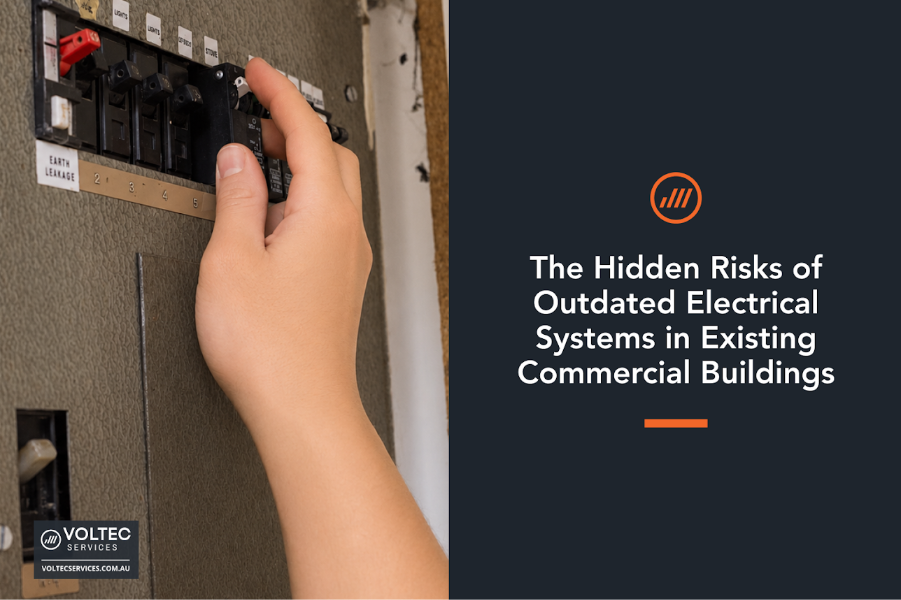
Many commercial buildings continue to operate with electrical infrastructure installed decades ago. While these systems may still appear functional on the surface, age, increased power demands, evolving compliance requirements, and changing operational needs can create hidden vulnerabilities that place businesses at risk.
As organisations invest in new technologies, automation systems, data networks, electric vehicle charging stations, and energy-intensive equipment, older electrical systems often struggle to keep pace. What was once sufficient for a building’s original purpose may no longer support modern commercial operations safely or efficiently.
Understanding these risks is the first step toward protecting people, assets, and business continuity.
Why Do Outdated Electrical Systems Become a Business Risk?
Electrical infrastructure naturally deteriorates over time. Components such as switchboards, cabling, circuit breakers, and protective devices are subject to wear, environmental conditions, thermal stress, and changing load demands.
As systems age, businesses may encounter:
- Reduced electrical reliability
- Increased maintenance requirements
- Greater risk of equipment failure
- Higher likelihood of electrical faults
- Potential safety and compliance concerns
- Increased risk of electrical fires
- Fire damage can result in significant losses
- Entire properties or business premises can be destroyed
The longer outdated infrastructure remains in service, the greater the potential for hidden issues to develop.
How Can Older Electrical Systems Affect Workplace Safety?
One of the most significant concerns associated with ageing electrical systems is safety. Deteriorated components can increase the risk of overheating, electrical shock, arcing faults, and fire.
Common safety issues include:
- Loose electrical connections
- Degraded insulation
- Ageing switchgear
- Overloaded circuits
- Faulty protective devices
- Lost productivity due to unplanned downtime
- Lost revenue from disruptions and outages
These issues often develop gradually and may remain undetected until a serious incident occurs.
Why Do Modern Business Demands Place Additional Pressure on Older Infrastructure?
Today’s commercial buildings consume significantly more power than they did even a decade ago. Businesses now rely on sophisticated technology, cloud-based operations, security systems, AV infrastructure, data networks, and connected devices.
Older systems may not have been designed to support:
- High-density office environments
- Advanced communication systems
- Data centres and server rooms
- Electric vehicle charging infrastructure
- Smart building technologies
As electrical demand increases, legacy systems can become overloaded, reducing reliability and increasing operational risk.
How Can Outdated Switchboards Create Hidden Problems?
The switchboard serves as the heart of a building’s electrical system. Older switchboards may lack modern safety features and may no longer be suitable for current operational loads. Businesses that regularly engage experienced electrical services Townsville professionals are often better positioned to identify ageing infrastructure before it develops into a major operational issue.
Potential issues include:
- Limited circuit capacity
- Obsolete protective devices
- Inadequate fault protection
- Difficulty sourcing replacement parts
- Increased downtime during failures
Without regular assessment, these vulnerabilities can remain hidden until a fault disrupts business operations.
What Compliance Challenges Can Older Installations Create?
Electrical standards continue to evolve to improve safety and performance. While older installations may have complied with requirements at the time of installation, modifications, expansions, or deteriorating conditions can create compliance concerns over time.
Businesses may face:
- Increased liability exposure
- Insurance complications
- Workplace safety concerns
- Challenges during audits or inspections
Regular electrical assessments help identify areas where upgrades or corrective actions may be beneficial.
How Can Proactive Upgrades Improve Operational Continuity?
Investing in electrical upgrades is often viewed as a cost, but many businesses discover it is a strategic investment in reliability and risk reduction.
Working with a reputable electrical service provider company allows businesses to plan upgrades strategically, ensuring electrical infrastructure continues to support operational demands, future expansion, and evolving compliance requirements.
Modern electrical infrastructure can provide:
- Improved system reliability
- Enhanced safety protection
- Greater energy efficiency
- Increased capacity for future growth
- Reduced maintenance costs
Proactive upgrades allow businesses to address issues before failures occur, minimising disruption and protecting productivity.
Why Is Professional Electrical Assessment Essential?
Many electrical risks remain hidden behind switchboard covers, inside cable pathways, or within ageing components. Professional inspections provide valuable insight into the condition and suitability of existing infrastructure.
Qualified electrical professionals can identify:
- Capacity limitations
- Deteriorating equipment
- Emerging fault conditions
- Compliance concerns
- Upgrade opportunities
This enables businesses to make informed decisions and prioritise maintenance or improvements effectively.
FAQs
How can I tell if my commercial building has an outdated electrical system?
Signs may include frequent breaker trips, flickering lights, limited power capacity, ageing switchboards, overheating equipment, or difficulty supporting modern technology requirements. A professional assessment can provide a clear evaluation.
Are older electrical systems automatically unsafe?
Not necessarily. However, ageing components, increased electrical loads, and lack of modern protection devices can increase risk over time, making regular inspections essential.
Why do commercial buildings often require electrical upgrades?
Business operations evolve. New equipment, technology systems, and higher energy demand often exceed the original design capacity of older electrical infrastructure.
Can outdated switchboards affect business continuity?
Yes. Older switchboards may be more prone to faults, component failures, and maintenance issues, increasing the risk of downtime and operational disruption.
How often should commercial electrical systems be inspected?
Inspection frequency depends on the building type, usage, and electrical demand. Many businesses benefit from periodic professional assessments to identify developing issues early.
What are the benefits of upgrading electrical infrastructure?
Modern electrical systems improve safety, reliability, energy efficiency, scalability, and compliance while supporting future business growth and reducing long-term operational risks.
Why Should Businesses Choose Voltec’s Expert Solutions?
Managing old electrical infrastructure requires technical expertise, proactive planning, and a thorough understanding of modern commercial requirements. Voltec’s expert solutions provide comprehensive electrical services designed to help businesses improve safety, reliability, and operational performance.
From inspections and maintenance to system upgrades and future-proof electrical infrastructure, Voltec delivers tailored solutions that support long-term business success.
Choose Voltec’s expert electrical testing and electrical maintenance services to identify hidden risks, strengthen electrical reliability, and ensure your commercial building is ready for the demands of the future.