
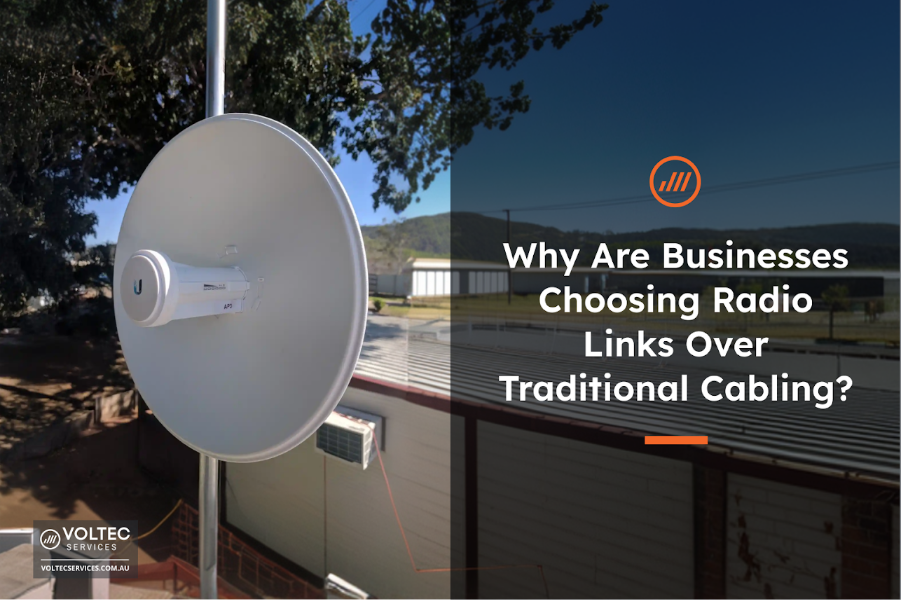
As modern businesses expand across larger facilities, remote locations, and multi-building environments, the demand for reliable and scalable connectivity continues to grow. Traditionally, underground or physical cabling has been the standard approach for connecting networks between buildings and operational areas. However, many organisations are now turning to radio link technology as a faster, more flexible, and cost-efficient alternative.
From industrial facilities and construction sites to schools, warehouses, and commercial campuses, radio links are transforming how businesses build communication infrastructure.
What Are Radio Link Systems?
Radio link systems use wireless point-to-point or point-to-multipoint technology to transmit data between locations without the need for physical cabling. These systems establish high-speed network connections using secure wireless communication between strategically installed radio devices.
Unlike conventional cabling projects that require trenching, excavation, and extensive infrastructure work, radio links provide connectivity through the air, significantly simplifying deployment.
Why Are Businesses Moving Away from Traditional Cabling?
Traditional cabling remains effective in many environments, but it also comes with limitations that can increase project complexity and costs.
Businesses often face challenges such as:
- Excavation and trenching expenses
- Disruption to daily operations
- Delays caused by infrastructure work
- Difficulties connecting remote or temporary sites
- Ongoing maintenance of underground cabling
Radio links eliminate many of these obstacles while still delivering reliable high-speed connectivity.
How Do Radio Links Reduce Installation Costs?
One of the primary reasons businesses adopt CCTV radio link systems is cost efficiency. Installing underground fibre or data cabling across large properties or between buildings can involve significant labour, civil works, permits, and restoration costs.
Radio link installations reduce these expenses by:
- Removing the need for trenching
- Minimising labour-intensive infrastructure work
- Reducing installation timeframes
- Lowering maintenance requirements
For many organisations, this creates a more practical and financially sustainable networking solution.
Why Are Radio Links Ideal for Remote and Challenging Environments?
Certain business environments make physical cabling difficult or impractical. Mining operations, construction sites, rural facilities, and temporary project locations often require network connectivity in areas where trenching is costly or impossible.
Radio links provide a reliable solution for:
- Remote facilities
- Multi-building commercial sites
- Temporary operational environments
- Large industrial properties
- Difficult terrain or protected areas
This flexibility makes radio technology particularly valuable for businesses requiring rapid deployment and adaptability.
How Do Radio Links Support Business Continuity?
Modern businesses depend heavily on uninterrupted communication and network access. Downtime can impact productivity, security systems, operations, and customer service.
Professionally installed radio links offer:
- Stable high-speed data transmission
- Reliable connectivity between locations
- Fast deployment during infrastructure expansion
- Reduced risk of physical cable damage
Because there are no underground cables vulnerable to excavation or environmental damage, businesses may also experience fewer infrastructure-related disruptions.
What Security and Performance Benefits Do Modern Radio Links Offer?
Modern radio link CCTV installation has advanced significantly in recent years. Today’s systems provide secure, high-capacity communication suitable for demanding commercial applications.
Professional radio link installations can support:
- CCTV and security systems
- VoIP communication
- Cloud-based operations
- Data transfer between facilities
- Business-critical applications
With proper design and alignment, businesses can achieve strong performance, low latency, and dependable uptime.
Why Is Professional Installation Essential for Radio Links?
Successful radio link performance depends heavily on system design, positioning, alignment, and environmental analysis. Poor installation can result in signal interference, instability, or reduced network performance.
Professional installation ensures:
- Correct line-of-sight assessment
- Proper antenna positioning and alignment
- Secure network integration
- Reliable long-distance performance
- Optimised bandwidth and signal strength
This expertise ensures businesses receive dependable connectivity tailored to their operational needs.
Why Should Businesses Choose Voltec’s Expert Solutions?
Reliable communication infrastructure is essential for modern operations, and radio links offer businesses a smarter alternative to traditional cabling in many environments. Voltec’s expert solutions provide professional radio link installation services tailored to commercial and industrial applications.
From system planning and site assessment to installation and ongoing support, Voltec delivers secure, scalable, and high-performance connectivity solutions designed for long-term reliability.
Choose Voltec’s expert industrial electrical maintenance services to build faster, smarter, and more flexible business connectivity with professional radio link systems.
FAQs
What is a radio link system?
A radio link system uses wireless technology to transmit network data between locations without physical cabling, providing secure and reliable connectivity.
Why are businesses choosing radio links over underground cabling?
Radio links reduce installation costs, minimise disruption, and provide faster deployment compared to trenching and underground cable installation.
Are radio links suitable for remote locations?
Yes. Radio links are ideal for remote facilities, construction sites, mining operations, and large commercial properties where traditional cabling may be difficult or expensive.
Can radio links support CCTV and business networks?
Absolutely. Modern radio links can handle CCTV systems, VoIP communication, cloud access, and other business-critical network applications reliably.
Are radio link systems secure?
Professionally installed radio links use secure communication protocols and encryption technologies to help protect business data and network traffic.
Why is professional installation important for radio links?
Proper installation ensures correct alignment, signal strength, stable performance, and reliable long-distance connectivity tailored to the site environment.